Women with Disabilities Demand Inclusive SRH Services in Climate Crisis
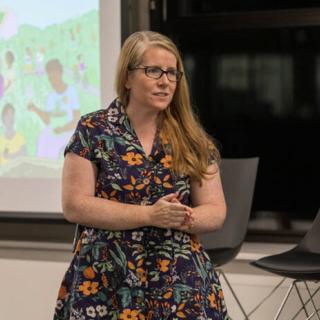
Recent event in Malawi highlighted the often-overlooked intersection of disability, gender, and climate justice.
Welcome To The
Gender Climate Tracker
Website
About the Gender Climate Tracker
News and Resource Center
Search
Gender Mandates
in Climate Policy
Women's Participation Statistics in Climate Diplomacy
Country Profiles
Data Insights: GCT in Action
| Reference to Women/Gender | |
|---|---|
| Context of Gender Reference |
Adaptation
|
| Gender Tags | |
| Submitted Language |
English
|
| Submitted Translation |
No
|
| Type of Support |
Conditional
Unconditional
|
| Monitoring and/or Implementation |
Monitoring
Implementation
|
| NDC Commitments |
Mitigation
Adaptation
|
| Participatory Process for NDC Development Mentioned |
Yes
|
| File Url |
LDC that is highly vulnerable to the impacts of climate change.
NDC was prepared with government’s full commitment and all inclusive process. It passed through the establishment of national NDC taskforce and the launching of the process at national level. The draft was prepared by the national taskforce assisted by national and international experts. The review of national policies and strategy documents as well as a series of consultations of key stakeholders, including a national workshop for the final validation of the NDC were conducted. Finally the document was approved by the government.
The NDC M&E will done by the Ministry of Finance, Economic Planning and Development, Ministry of Natural Resources, Energy and Mining and other sectoral ministries. Government of Malawi will require external technical and financial support to put in place a tailor-made NDC tracking system to monitor short, medium and long term implementation.
In adaptation measures, gender is identified as a priority thematic area. It states: It is worth noting that gender is a cross-cutting issue. Hence, it needs to be mainstreamed in all the sectors. Vulnerable and disadvantaged groups carry the burden of the impacts of climate change. Women and girls are particularly impacted, as they have to walk further in search of basic commodities for the family such as firewood and water. Yet, women may not have the authority to decide on alternative and climate-resilient solutions for the household. The adaptation interventions proposed in this NDC are meant to enhance gender inclusiveness in the adaptation programmes and projects. Under ‘other implementation considerations’ there is the following point on ‘Human rights and gender’: Vulnerability and adaptation assessments have shown that most of Malawi's social economic sectors are prone to negative impacts of climate change. Through this NDC, Malawi has expressed the need for external support in the implementation of adaptation policy actions that will reduce the vulnerability of the sectors and enhance people's resilience to the negative impacts of climate change. Human rights and gender issues are enshrined in the Malawi Constitution, and Government of Malawi is committed to its Gender Policy, promoting the mainstreaming of gender in all government sectors, programmes and projects. Consideration of these cross-cutting issues is critical in the design and implementation of mitigation and adaptation actions.
| Reference to Women/Gender | |
|---|---|
| Context of Gender Reference |
Adaptation
|
| Gender Tags | |
| Submitted Language |
English
|
| Submitted Translation |
No
|
| Monitoring and/or Implementation |
Monitoring
Implementation
|
| NDC Commitments |
Mitigation
Adaptation
|
| Participatory Process for NDC Development Mentioned |
No
|
| File Url |
Developing country already experiencing the impacts of climate change, such as massive floods and droughts
This update was developed through a consultative process, which was designed considering the context of Malawi’s national development priorities.
The updated NDC recognizes that implementation will require “concerted efforts with the involvement and participation of all stakeholders including NGOs, Civil Society, the private sector, academia and the general public.” Malawi’s UNFCCC Focal Point, the Ministry of Forestry and Natural Resources through the Environmental Affairs Department shall coordinate the NDC’s implementation. Stakeholders are “expected to implement various aspects of the NDC and report on the same, in order to allow for tracking of implementation progress.” This NDC also provides for an improved Monitoring and Evaluation framework, which includes “engendered measure-specific indicators capable of tracking the extent of gender and vulnerability integration across sectors.”
Gender is mentioned numerous times in this updated NDC. Gender was identified as one of the sectors most affected by climate change, and is thus prioritized in the country’s adaptation plans and actions. For example, to support public health and social protection amidst climate change, adaptation measures include the promotion of gender mainstreaming in policies, projects and programs. In relation to capacity building, Malawi also plans to “integrate the mainstreaming of gender considerations within climate change measures, and where relevant, to track climate change issues and indicators according to gender and vulnerable groups.”
Recent event in Malawi highlighted the often-overlooked intersection of disability, gender, and climate justice.
Food insecurity in sub-Saharan Africa is exacerbated by climate change, and women are particularly affected.
UN human rights experts warn of a direct link between the pandemic, socio-economic vulnerability, and the risk of exploitation.
More extreme weather is taking girls out of school, forcing them into earlier marriages & increasing their exposure to violence
The Gender Climate Change and Agriculture Support Programme (GCCASP) was designed to enhance resilience of rural women.
 Download
2024
Download
2022
Download
2022
Download
2021
2020
Download
2018
Download
2017
Download
2015
Download
2012
Download the GCT App for your mobile device for the offline access to our data.


Share your relevant documents on the country profiles and help us improve the platform.